Most loading dock problems start with the bumpers
A flattened dock bumper quietly changes the geometry of the whole bay, and everything downstream starts failing.
September 16, 2026 · 4 min read
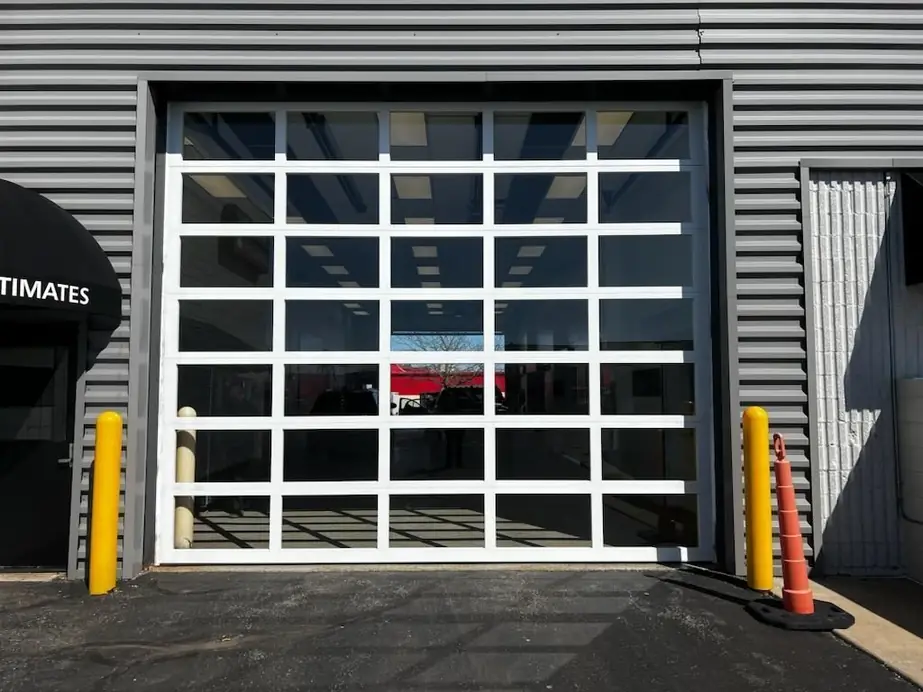
When we get called to a loading bay that is not working properly, the reported fault is almost always the leveller. The actual cause is very often a set of dock bumpers that nobody has looked at in years, because they are the cheapest and least interesting component on the bay.
It is worth understanding why, because it is the difference between a small scheduled replacement and a leveller repair that keeps coming back.
The bay is one system
A loading bay is a leveller, an overhead door, a seal or shelter, a set of bumpers and often a vehicle restraint. Every one of those is positioned relative to the others and to where a trailer stops.
Bumpers are what set that stopping distance. They are not just crash protection, they are the datum for the whole bay. When they are the thickness they were designed to be, the trailer bed lands where the leveller lip expects it. When they are not, everything downstream is working outside its intended range.
What happens as bumpers compress
Laminated rubber bumpers flatten and delaminate over years of being hit by trailers. Once they have lost an inch or two of thickness, the trailer sits that much closer to the dock face.
Now the leveller lip has less trailer bed to extend onto. It may not seat fully, it may seat at a steeper angle, or it may catch. The lip and its hinge start taking loads at angles they were not designed for, and the leveller develops a fault that looks like a leveller problem and is not.
Worse, once the bumpers are gone entirely, the trailer body itself contacts the dock face. Concrete spalls, dock seals get torn, and the damage moves from a consumable part to the building.
How to tell they are due
- Measure the bumper thickness against a new one. Significant compression means replace.
- Look for delamination, where the rubber layers have separated or pulled from the plate.
- Check the mounting bolts. Bumpers that are loose have usually been loose a long time.
- Look at the dock face concrete around the bumpers for fresh spalling or impact marks.
- If the leveller lip has started catching or not seating fully, check the bumpers first.
Seals and shelters, and a Michigan winter
The other component people undervalue is the seal or shelter. An unsealed bay with a trailer on it is an open hole in the building for as long as the trailer is there, and in a Michigan January that is a genuine heating cost rather than a theoretical one.
Compression seals suit a fleet with consistent trailer heights. Shelters suit mixed fleets and wider tolerances, because they accommodate variation that a compression seal cannot. Torn fabric and collapsed foam are ordinary wear items and replacing them is far cheaper than heating the yard.
Levellers do have their own faults
None of this is to say the leveller is never the problem. Mechanical, hydraulic and air levellers all have their own failure modes, from worn springs and seized hinges to hydraulic leaks and failed control valves, and all of them need servicing.
Air levellers are the most forgiving of the three in a dusty bay because there is less linkage to seize, but the bag itself is a consumable and a puncture takes the bay out completely. Hydraulic units are the easiest to fault find, since a pressure test tells you quickly whether you are chasing a pump, a valve or a cylinder seal. Mechanical levellers are the most common and the most likely to have been left unserviced for years, because they keep half working long after the spring tension has drifted out of specification.
Vehicle restraints deserve the same attention and rarely get it. A restraint that has stopped engaging reliably is a safety device that people have quietly started working around, which is the worst state for any safety device to be in. If your drivers have developed a habit of chocking wheels because the restraint is unreliable, that is worth fixing rather than tolerating.
The point is the order of investigation. Checking the bumpers first takes two minutes and explains a surprising proportion of the faults we are called out to.
Put the bay on a schedule
Bays that cycle all day should not be maintained annually the way a house door is. The right interval depends on how many trailers you turn around, and it is worth setting it against real numbers rather than a calendar default.
Our technicians hold Fork Truck and Man Lift credentials for commercial work, and we supply, install, service and repair truck dock systems alongside the overhead doors above them. If a bay is giving trouble, we will look at the whole thing rather than the one part that was reported.
Crawford Door Sales, (734) 483-4563
Call (734) 483-4563More articles
Why your garage door sounds like that
Doors rarely fail without warning. They just warn you in a language most people have not learned.
Insulated or not: how to decide for a Michigan garage
The R value on the sticker matters far less than whether the garage is attached to anything you heat.